Mogador Island
A treasure off the coast of the city of winds
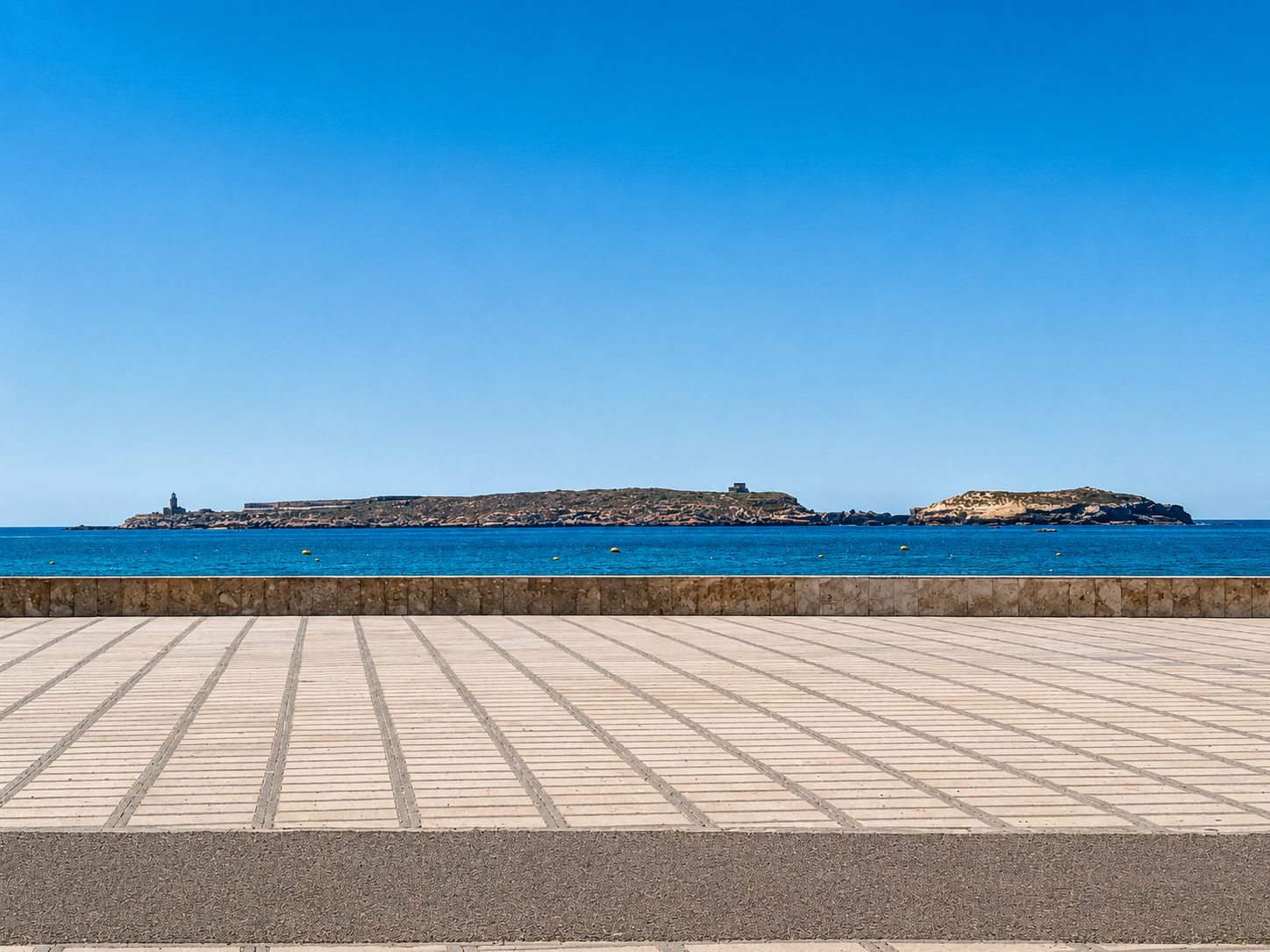
Just 1.5 kilometers from the ramparts of Essaouira, the island of Mogador has overlooked the Atlantic Ocean for more than two millennia. Visible from the Skala du Port, the beach and the ramparts of the medina, this mysterious island immediately catches the eye of visitors.
Occupied for a long time by different civilizations, it was in turn a trading post, a military fortress, a prison and today a protected nature reserve. Inaccessible to the public, it remains one of the most fascinating and least known sites of Moroccan heritage. Together with the rocky islets that surround it, it forms the archipelago of the Purple Islands, a site of exceptional historical, archaeological and ecological importance.
The origins of Mogador
Long before the founding of Essaouira, the island of Mogador already occupied a strategic position on the maritime routes of the Atlantic. As early as the 8th century BC, the Phoenicians, and later the Carthaginians, used the island as a trading stopover between Africa and the Mediterranean.
A few centuries later, under the reign of the Berber king Juba II, the island became world-famous for the production of the celebrated royal purple. This purple dye, obtained from a small shellfish called murex, was one of the most precious materials of antiquity. Reserved for Roman emperors, kings and great families, it gave its name to the archipelago: the Purple Islands. Archaeological excavations carried out on the island have uncovered the remains of this activity, more than 2,000 years old.
A fortress at the heart of Essaouira's defense
At the beginning of the 16th century, the Portuguese attempted to settle on the archipelago in order to control maritime trade along the Atlantic coast. There, they built a fortress named Castelo Real de Mogador in 1506. But faced with resistance from local tribes, notably the Regraga, they abandoned the island for good just four years later.
Two centuries later, when Sultan Sidi Mohammed Ben Abdallah founded the modern city of Essaouira, the island was integrated into the city's vast defense system. Ramparts, cannon batteries and several military buildings were constructed to protect the entrance to the port, which quickly became one of the most important in Morocco. Even today, the remains of these fortifications are visible from the coast.
A prison in the middle of the ocean
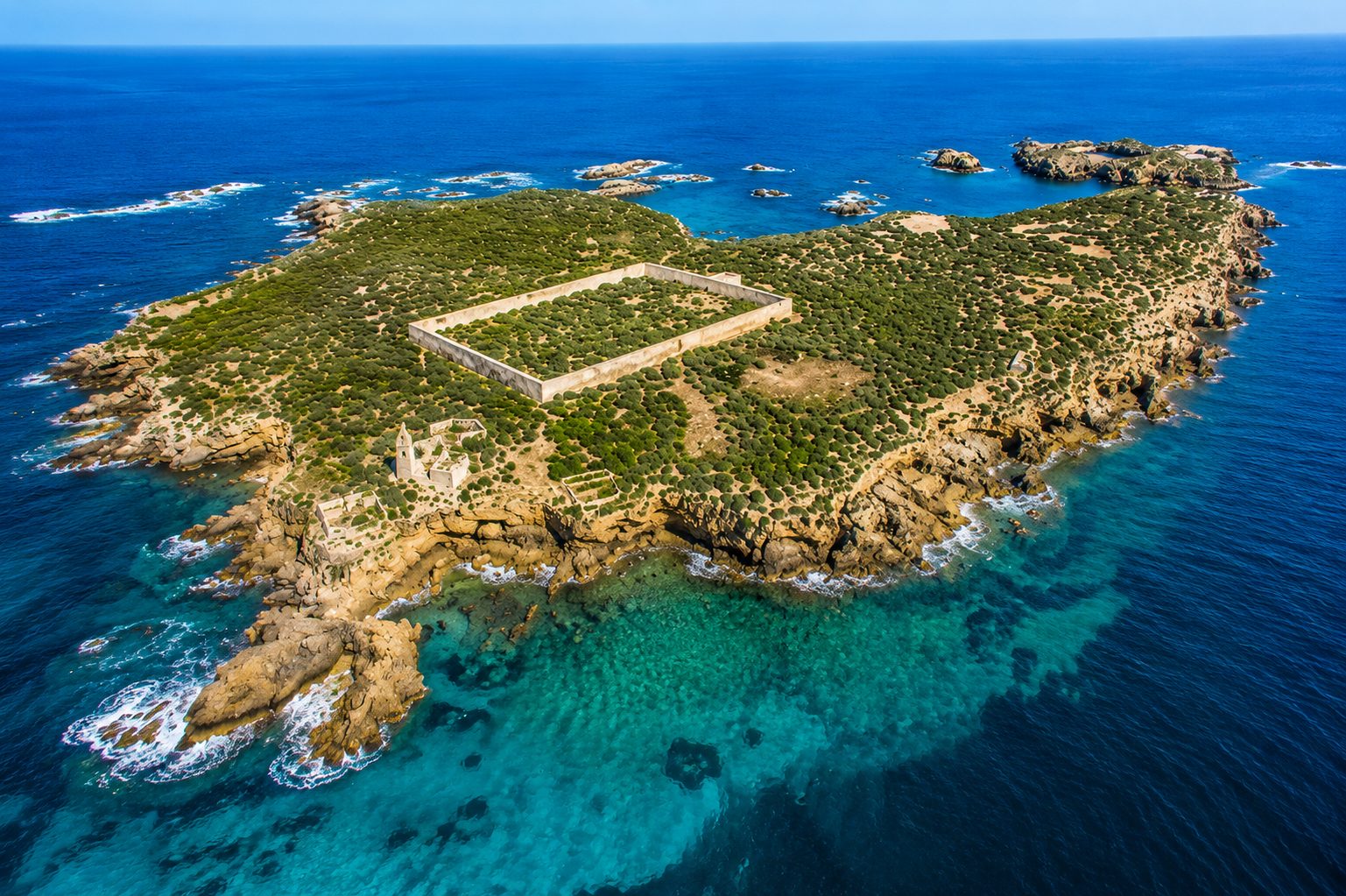
At the end of the 19th century, the island underwent a new transformation. Under the reign of Sultan Moulay Abdelaziz, an immense rectangular enclosure was built to house a prison intended for detainees and people exiled far from the mainland. Visible from the air, this building, nearly 150 meters long, is today the most impressive structure on the island. Prisoners lived under particularly harsh conditions, exposed to the powerful Atlantic winds and constant humidity.
Later, during the French protectorate, the enclosure also served as a lazaret, a quarantine facility intended to receive certain travelers returning from the pilgrimage to Mecca, in order to limit the spread of disease. The island also remains famous for the spectacular escape of several Moroccan resistance fighters in 1955, a landmark episode in the country's history.
The remains of an ancient mosque
Among the most remarkable ruins on the island are the remains of an ancient mosque, easily recognizable by its small minaret which is still visible today. Built for the soldiers and inhabitants who once occupied the island, this mosque is a reminder that Mogador was not merely a military outpost, but a genuine place of life. Even in ruins, it remains one of the most iconic symbols of the island.
A nature reserve unique in the world
Today, the island of Mogador is above all an ecological sanctuary. Classified as a nature reserve, it is home to exceptional biodiversity and hosts every year one of the largest colonies in the world of Eleonora's Falcon (Falco eleonorae).
Between spring and late summer, these migratory birds of prey come here to nest before heading to Madagascar for the winter. Scientists have observed a particularly astonishing behavior in this species: the falcons capture small migratory birds, remove the feathers from their wings, and keep them alive in the crevices of the rocks so as to have fresh food available for their chicks. This hunting strategy is almost unique in the animal kingdom.
Why is the island off-limits to the public?
Due to the fragility of its ecosystem, the presence of protected species and the condition of the historical remains, access to the island of Mogador is strictly forbidden. Only a few researchers, archaeologists and specialists with official authorization are exceptionally allowed to land there. This protection helps preserve exceptional natural and historical heritage for future generations.
How can you admire the island of Mogador?
Even though the island cannot be visited, it remains easy to observe from several strategic points in Essaouira:
Must-see viewpoints: The Skala du Port, the ramparts of the medina, Essaouira's beach and the fishing port all offer a breathtaking view of the archipelago.
Boat trips: Boat excursions allow you to sail all around the archipelago and admire the buildings a little more closely, without ever landing on the island.
At sunset, the silhouette of the island stands out beautifully against the Atlantic Ocean, offering one of the most beautiful panoramas of the city.
Practical information
📍 Location: About 1.5 km off the coast of Essaouira.
🏝️ Area: Approximately 30 hectares.
🌿 Status: Protected nature reserve.
🚫 Access: Off-limits to the public.
🦅 Emblematic species: Eleonora's Falcon.
🏛️ To discover from the coast: The old fortifications, the former prison, the remains of the mosque, the wild cliffs and the colonies of seabirds.
Why discover the island of Mogador?
The island of Mogador is far more than a simple islet off the coast of Essaouira. It is a genuine open-air history book, where ancient civilizations, Portuguese explorers, Moroccan sultans, old fortifications, a forgotten prison and an exceptional nature reserve all come together. Invisible up close yet ever-present in the landscape of Essaouira, it embodies the very soul of the city of winds.
From the ramparts or the Skala du Port, take the time to observe it: behind its wave-battered cliffs lies more than 2,500 years of history, making the island of Mogador one of the most precious treasures of Moroccan heritage.